
Stretching and Workplace Wellness
Promoting Ergonomic Health in the Workplace
Ergonomic health in the workplace is a critical aspect of employee well-being, productivity, and long-term organizational success. As modern work environments increasingly involve prolonged periods of sitting, repetitive tasks, and technology use, prioritizing ergonomics can mitigate health risks, reduce workplace injuries, and foster a culture of wellness. This article explores common ergonomic issues in the workplace, provides interactive solutions such as desk stretch routines, and discusses strategies for collaborating with businesses to implement effective corporate wellness programs.
Understanding Ergonomics in the Workplace
Ergonomics is the science of designing work environments to fit the physical and psychological needs of employees. Proper ergonomics ensures that workstations, tools, and tasks align with the natural movements and capabilities of the human body. By optimizing workplace design, businesses can enhance employee comfort, reduce the risk of musculoskeletal disorders (MSDs), and improve overall job satisfaction. Below, we delve into key areas to promote ergonomic health effectively.
Common Workplace Ergonomic Issues
Prolonged exposure to poor ergonomic conditions can lead to a range of health issues, particularly musculoskeletal disorders. Below are some of the most common workplace ergonomic issues, their causes, and their impact on employees.
Neck Pain
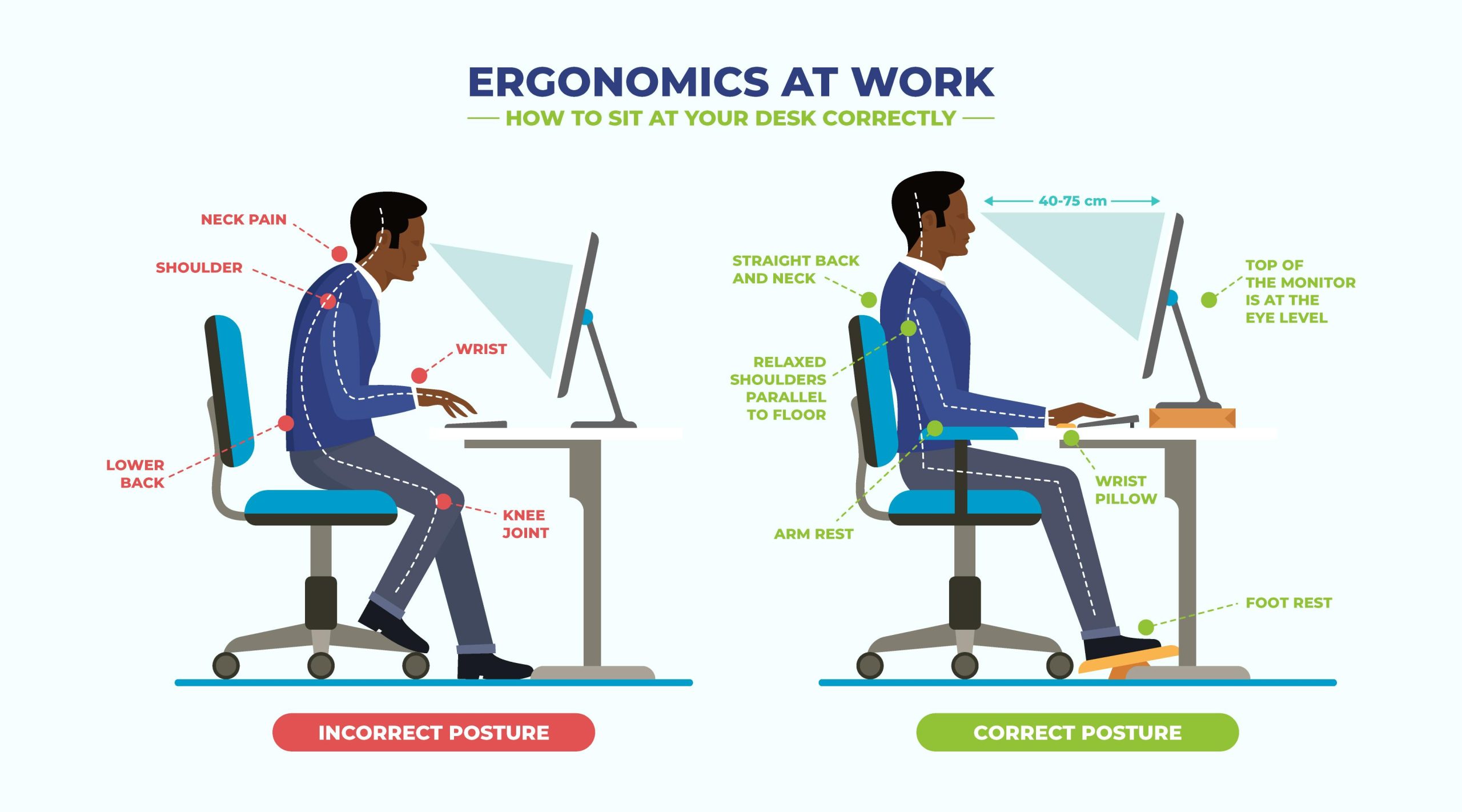
Neck pain is a prevalent issue among office workers, often caused by improper monitor positioning, poor posture, or prolonged static positions. For example, tilting the head forward or craning the neck to view a screen can strain the cervical spine. Over time, this can lead to chronic pain, stiffness, and even headaches.
- Causes: Monitors placed too high, low, or off-center; lack of adjustable chairs; or slouching posture.
- Impact: Reduced concentration, discomfort, and potential for long-term cervical spine issues.
Carpal Tunnel Syndrome
Carpal tunnel syndrome (CTS) results from compression of the median nerve in the wrist, often due to repetitive hand movements or improper wrist positioning during typing or mouse use. Symptoms include numbness, tingling, and weakness in the hands.
- Causes: Non-ergonomic keyboards, improper wrist alignment, or repetitive tasks without breaks.
- Impact: Decreased hand dexterity, chronic pain, and potential need for medical intervention.
Lower Back Pain
Lower back pain is common among employees who sit for extended periods without proper lumbar support. Chairs without adjustable lumbar support or incorrect seat height can exacerbate this issue.
- Causes: Poor chair ergonomics, prolonged sitting, or improper lifting techniques.
- Impact: Chronic discomfort, reduced mobility, and increased absenteeism.
Addressing these issues requires a proactive approach, including ergonomic assessments, employee education, and the introduction of wellness initiatives.
Interactive Ideas: Desk Stretch Routines
Incorporating regular movement into the workday is a practical and effective way to combat ergonomic issues. Desk stretch routines are simple, time-efficient exercises that employees can perform at their workstations to relieve tension, improve circulation, and enhance flexibility. Below is a sample desk stretch routine that can be implemented in any workplace.
Sample Desk Stretch Routine (5–10 Minutes)
- Neck Rolls
- Purpose: Relieve neck tension and improve mobility.
- Instructions: Sit upright with shoulders relaxed. Slowly roll your head in a circular motion, starting by dropping your chin to your chest, then moving to the right, back, and left. Complete 5–10 rolls in each direction. Avoid forcing the motion or straining.
- Seated Spinal Twist
- Purpose: Alleviate lower back tension and improve spinal flexibility.
- Instructions: Sit with feet flat on the floor. Place your right hand on your left knee and your left hand behind you on the chair. Gently twist your torso to the left, complete 15–20 reps per side.
- Wrist and Forearm Stretch
- Purpose: Reduce wrist strain and prevent carpal tunnel syndrome.
- Instructions: Extend your right arm forward, palm up. With your left hand, gently pull your right fingers back toward your body, stretching the forearm. Repeat 15 times hold the stretch position for 2 seconds, then switch sides. Repeat with palms facing down to stretch the top of the forearm.
- Shoulder Shrugs
- Purpose: Release shoulder tension.
- Instructions: Sit or stand with arms relaxed. Lift your shoulders toward your ears, hold for 2 seconds, then release. Repeat 10–15 times.
- Seated Cat-Cow Stretch
- Purpose: Improve spinal mobility and posture.
- Instructions: Sit at the edge of your chair with hands on knees. Inhale, arch your back, and lift your chest (cow position). Exhale, round your back, and tuck your chin (cat position). Repeat for 5–8 cycles.
- Standing Desk Stretch
- Purpose: Engage the entire body and promote circulation.
- Instructions: If possible, stand and perform a full-body stretch. Raise your arms overhead, interlace your fingers, and stretch upward. Then, bend slightly to each side for a gentle side stretch. Hold each side for 2 seconds and repeat 15 times.
Implementation Tips
- Schedule Breaks: Encourage employees to perform stretches every 1–2 hours or during scheduled breaks.
- Visual Reminders: Provide posters or digital reminders with stretch instructions at workstations.
- Group Sessions: Organize short, guided stretch sessions during team meetings or lunch breaks to foster participation.
- Accessibility: Ensure stretches are adaptable for employees with mobility limitations, offering seated or modified versions.
These routines require minimal time and space, making them ideal for busy workplaces. They not only address physical discomfort but also promote mental refreshment, enhancing overall productivity.
Collaborating with Businesses to Introduce Corporate Wellness Programs
Corporate wellness programs are a powerful tool for promoting ergonomic health and fostering a supportive work environment. By collaborating with businesses, wellness professionals, ergonomic specialists, and HR teams can design programs that address employee needs and align with organizational goals. Below are strategies for effective collaboration and program implementation.
Conducting Ergonomic Assessments
Collaboration begins with understanding the workplace’s unique ergonomic challenges. Partner with businesses to conduct comprehensive ergonomic assessments, including:
- Workstation Evaluations: Assess chair height, monitor positioning, keyboard placement, and lighting.
- Task Analysis: Identify repetitive or high-risk tasks that contribute to musculoskeletal disorders (MSDs).
- Employee Feedback: Use surveys or focus groups to gather insights on common pain points or discomfort.
These assessments provide a baseline for designing targeted interventions and prioritizing resources.
Designing Tailored Wellness Programs
Work with businesses to create wellness programs that integrate ergonomic education, physical activity, and mental health support. Key components include:
- Ergonomic Training: Offer workshops on proper posture, workstation setup, and safe lifting techniques. Include hands-on demonstrations and personalized feedback.
- Physical Wellness Initiatives: Incorporate desk stretch routines, standing breaks, or walking meetings to encourage movement.
- Mental Health Support: Provide stress management resources, such as mindfulness sessions or access to counseling, as stress can exacerbate physical discomfort.
- Incentive Programs: Encourage participation through rewards, such as gift cards or extra break time, for completing ergonomic training or wellness challenges.
Partnering with Leadership
Engage company leadership to ensure buy-in and long-term success. Strategies include:
- Presenting Data: Share statistics on the cost of workplace injuries (e.g., absenteeism, medical claims) and the benefits of ergonomic interventions (e.g., increased productivity, reduced turnover).
- Aligning with Goals: Frame wellness programs as a way to enhance employee engagement and organizational reputation.
- Pilot Programs: Start with a small-scale pilot in one department to demonstrate measurable outcomes, such as reduced injury reports or improved employee satisfaction.
Conclusion
Promoting ergonomic health in the workplace is an investment in employee well-being and organizational success. By addressing common issues like neck pain, carpal tunnel syndrome, and lower back pain, businesses can reduce workplace injuries and enhance productivity. Interactive solutions, such as desk stretch routines, provide accessible ways to incorporate movement into the workday. Collaborating with businesses to implement corporate wellness programs ensures that ergonomic health becomes a core component of workplace culture. Through assessments, tailored interventions, and leadership engagement, organizations can create healthier, more productive work environments that benefit both employees and the bottom line.