Myth…I should hold a stretch for 10 sec – 3 min in order for it to do me any good, right? WRONG!

Muscles can elongate 1.6 times their resting length when they’re healthy, but they generally don’t like to do that. If you elongate a muscle for a prolonged period of time or you stretch it to far, it automatically recoils to protect itself from ripping. On the other hand, your muscle will ballistically recoil if you stretch to fast too soon. Both these neurological reactions or compensations are called “Myotatic reflexes”.  Lets focus on the long stretches for now; when stretching for 10  seconds or more, the intensity just might become to much for your muscles. Imagine yourself the last time you tried to do splits. Unless you are naturally flexible, it might have been something like this; you leap out of the chair and stand straight up, then you slid your right foot forward and your left foot backward until you felt a “tug” on the insides of your thighs. You either pull up your legs immediately or buckle your knees and drop to the floor to get that pressure of your hips. You pull your knees up to relax the tension. You were experiencing the “Myotatic reflex”: a load and clear message that you were going to rip the muscle in the next second and you needed to let go NOW.

Read More

Myth…I must always warm up before I stretch, right? WRONG!

Active Isolated Stretching is warming up the muscles by itself. As you work your muscles, you are pumping blood to them and firing them, one at time. As each set of stretches progresses, you gradually increase your range of motion with gentle assistance at the end of each stretch. Each subsequent stretch is a little more elongated, which means the muscle on top of the stretching muscle is firing a little harder. Everything is becoming more efficient and working more smoothly. This is why we recommend an Active- Isolated stretch routine before you begin a workout.

Following a workout, an identical routine can help flush metabolic wastes such as lactic acid that accumulate in a stressed muscle. The gentle pumping action of the routine sends blood to parts of the body that have worked hard. Healing and recovery begin and are accelerated. Range of motion is restored in areas that have been tracked in very rigid and specific patterns – Like running. In this manner, stretching can be used as a ‘cool down’ routine. See more on www.stretchingsa.co.za

Read More

Myth… Resting or immobilizing an exhausted or injured muscle will facilitate healing, right? Wrong!

Conventional wisdom use to be that we RICE an injury, right? You know. Rest. Ice. Compression. And elevation. But, we have found that immobilizing an injury – unless it is fractured or shredded – shuts the muscle down and restricts blood flow. And, frankly, opening a muscle or joint up and encouraging blood flow to oxygenate the area and flush out metabolic waste from injury seems a whole lot more intelligent to us. Additionally, immobilizing a muscle causes it – and everything around it – to atrophy. And the body instantly will launch a series of compensations to make up for the fact that something is not working properly or at all, which will cause more imbalances and instabilities and greater risk of more injury elsewhere.

So here’s our opinion. The best way to treat an injury is MICE. Move it. Ice it. Compress it when you’re on periodic breaks from your rehab program. And Elevate it (Preferably with your stretch rope, during long and frequent routines.)

Read More

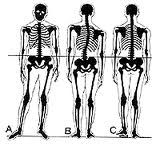
Myth….If I am constantly getting injured on one side, that must mean that I have a leg length discrepancy, right?

We hear this one all the time, and we are glad to set the record straight! Significant leg discrepancies are not common. Frequently, an athlete will be evaluated by lying flat on a table with an observer at the foot of the table. The observer takes both of the athlete’s feet in his or her hands, presses the ankles together, “eyeballs” the soles of the feet, and finally declares, “YEP! Your left anklebone is a full 2 cm below your right one buddy! Your left leg is definitely longer.”

Read More

Muscles recover more quickly if I sit in a tub of hot water, right? myth…

WRONG!!Although we will not deny that it feels wonderful to sink into a hot bath after a hard day’s workout on a cold winter’s day, we have to tell you that “feeling wonderful” is about the limit of benefit. External heat is comforting and relaxing, but, when we are facilitating muscle recovery, we need a little more. When your muscles have been active, they already have been heated up. Cold reduces swelling and initially restricts blood flow, providing a natural compress on the microscopic tears in the tissue that are leaking blood into the traumatized area. Shortly, the body will recruit new blood to the cold area (notice it turns a little red?) that flushes out metabolic wastes and lactic acid- byproducts of heavy muscle activity.

Read More